
 Business License
Load Bank Testing for Standby Generators
Published on 19 November 2026
A generator that starts and carries a building at 12% load has not been tested. It has been started. This article covers what a Rongtai resistive-inductive load bank actually proves on a standby set, how to size one for an acceptance test against NFPA 110 and ISO 8528-6, and the site conditions that most often void the test result before the first step is applied.
The Gap Between a Factory Test and a Site Test
Generating sets are characterised at the works. ISO 8528-6:2023 defines the test methods for the complete set, and it is explicit that the functional test is normally run at rated power factor, with unity power factor permitted only as an alternative by agreement between manufacturer and customer. That is a sensible engineering position: at 0.8 PF the alternator, exciter, and voltage regulator all operate at their design point.
On site the picture changes. Commissioning agents test with whatever load the building can offer, and for a standby plant that is usually lighting, HVAC, and a few pumps — often under 20% of nameplate kW. Three consequences follow, and each one has a cost:
The engine never reaches operating temperature. Light-load running for 30-minute monthly exercises produces incomplete combustion, wet stacking, and glazed cylinder bores. NFPA 110 addresses this directly: monthly exercise must reach not less than 30% of nameplate kW or the manufacturer's minimum exhaust gas temperature, and where that cannot be achieved, an annual supplemental load bank test applies — commonly 50% for 30 minutes followed by 75% for one hour.
The alternator is never proven. A resistive-only bank rated in kW loads the prime mover but leaves roughly 20% of the machine's kVA untested at 0.8 PF. Excitation response, AVR stability under step load, and winding temperature rise per IEC 60034-1 remain assumptions.
Failures surface at the worst moment. Uptime Institute's 2025 Annual Survey found that 57% of respondents' most recent major outage cost more than US$100,000, and one in five exceeded US$1 million for the second year running, with power remaining the leading cause of impactful outages. A standby system that has never been loaded is a probability, not a redundancy.
What a Resistive-Inductive Load Bank Adds
Rongtai builds load banks from 1 kW to 50 MW in three families that map onto the three failure modes above:
Resistive banks (kW only) load the engine and the cooling system. Correct for NFPA 110 compliance runs, engine break-in, and fuel system checks.
Resistive-inductive banks add kvar to reach rated kVA at 0.8 PF, exercising the alternator, exciter, AVR, and main breaker at the point the acceptance criteria are written against.
Resistive-capacitive banks cover leading power factor, which matters at UPS output and where filter or capacitor banks are part of the system under test.
Practical details that decide whether the test is usable:
Steps, not a single throw. Contactor-stepped elements let the commissioning agent apply 25/50/75/100% in sequence, hold each step, and capture the transient response at each transition — the data that proves load acceptance, not just steady-state capacity.
Control. Local panel operation for a witness test; remote PC control where the bank sits in a container outside the plant room and the operator needs to watch the set.
Voltage and frequency coverage. 380–415 V at 50 Hz for EU and Middle East sites, 480 V at 60 Hz for North American installations, medium-voltage containers for service-entrance and paralleled-bus testing.
Heat is the real site constraint. Every kW of load becomes kW of heat — 1 MW is roughly 3.4 million BTU/h. A bank inside a plant room needs ducting or an outdoor position; this is usually the item that turns a 2-hour connection into a 2-day one.
How to Size a Load Bank for a Generator Acceptance Test
The long-tail question buyers ask is how much bank they need, and the answer starts from the acceptance criteria, not the nameplate.
Read the criteria first. NFPA 110 sets monthly and annual load levels; ISO 8528-6 sets the factory method; the project specification and ANSI/NETA ATS-2025 set what the commissioning agent will witness and sign. Whichever is most demanding governs.
Convert to kVA at the specified power factor. A 1,000 kVA set at 0.8 PF needs 800 kW plus 600 kvar. Ordering 800 kW of resistance alone tests the engine fully and the alternator partially.
Apply site derating. Engine output is normally referenced to ISO 3046-1 standard conditions of 25 °C, 100 kPa, and 30% relative humidity. A 45 °C site in the Gulf loses output, so the bank must still be able to hold the required percentage of the site rating for the full hold time.
Confirm the electrical interface. Phase and wire configuration, cable length and current rating, breaker and earthing arrangements at the connection point. Interface mismatch is the most common reason a bank arrives and cannot be connected.
Sequence the steps. Typically 25%, 50%, 75%, 100%, with a hold long enough for temperatures to stabilise at full load — 30 minutes at each step is a common specification, longer at 100%.
Record the transient, not just the steady state. Voltage dip and recovery, frequency deviation, and recovery time at each step are the numbers that distinguish a healthy set from one that will trip on a real transfer.
Log and witness. Signed test sheets from the commissioning agent complete the item.
Configurations We Have Delivered
Client names and reported outcomes are not ours to publish; the configurations below are described by purpose only.
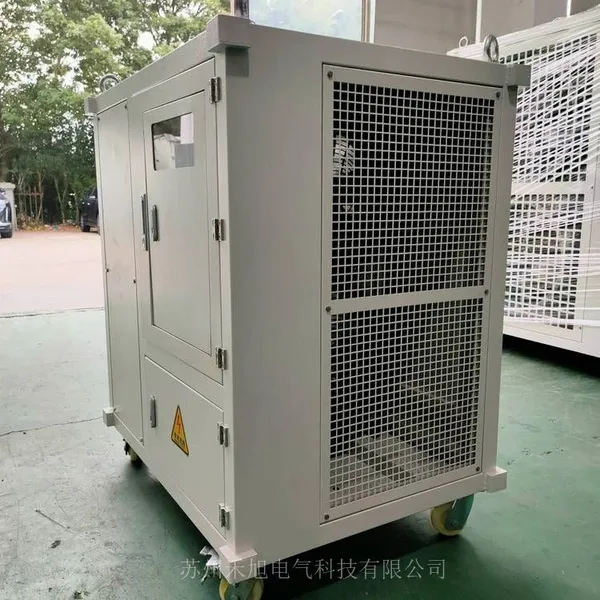
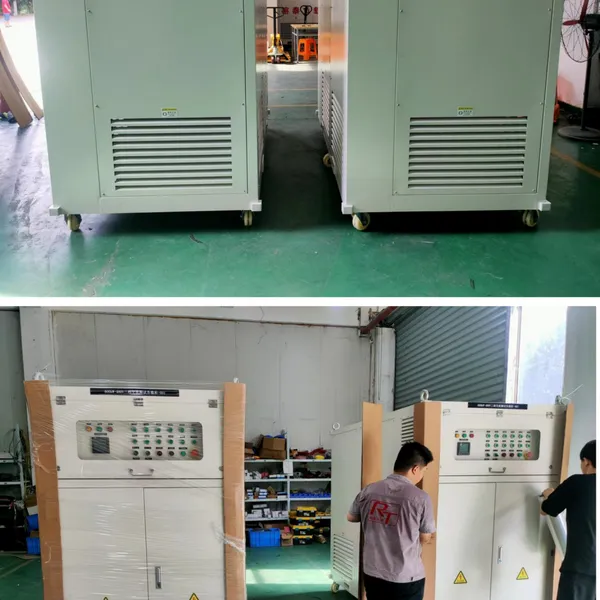
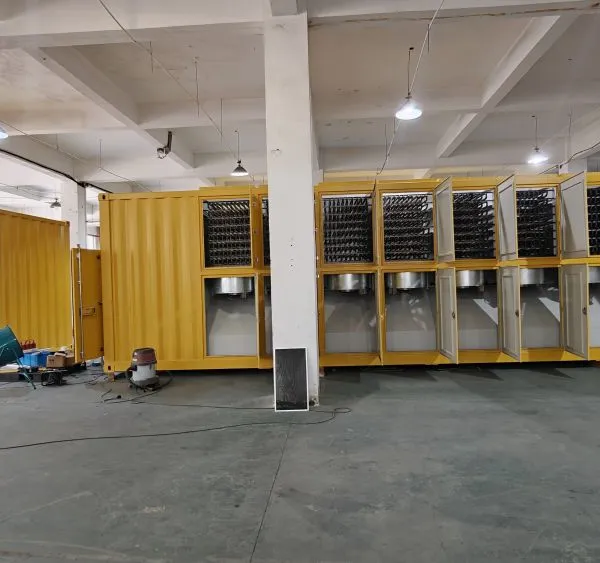
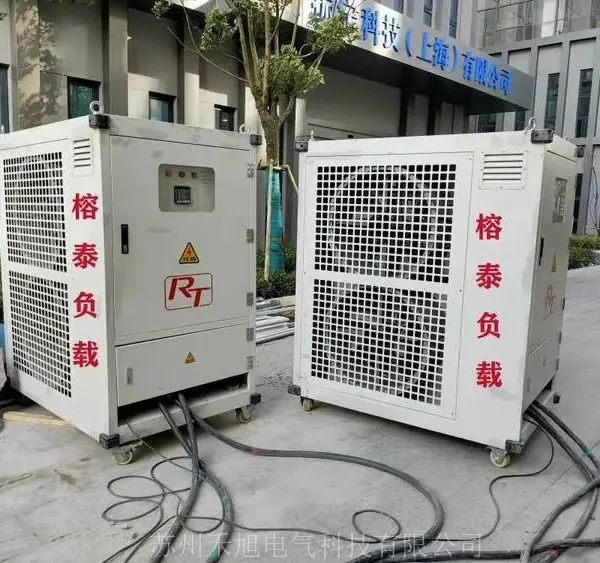
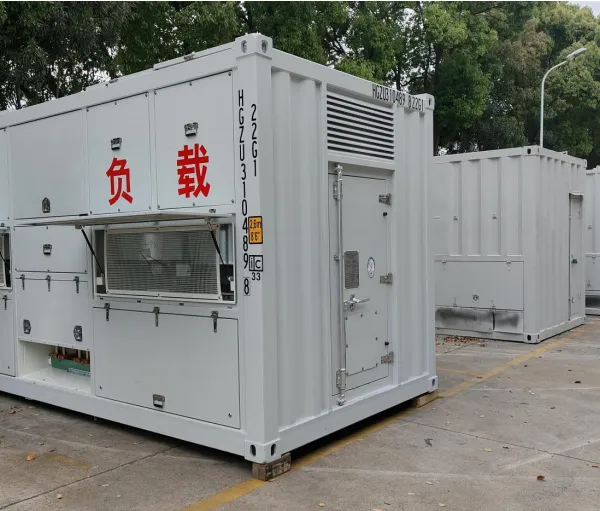
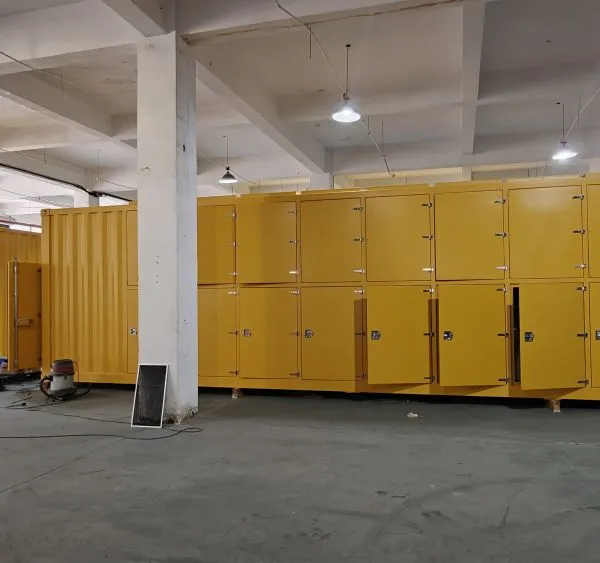
A 6,000 kW resistive-inductive bank was supplied for a plant back-feed test, where station supply is reversed into the system before the grid connection exists — a case requiring both kW and kvar with stepped application. Containerised medium-voltage banks have been built for service-entrance and transformer testing, and low-voltage trailer units for generator acceptance where the set is commissioned before the building load is available.
FAQ
Can I rent a load bank instead of buying one?For a single commissioning window, rental is usually cheaper, and Rongtai supplies both. Purchase becomes the better calculation when the site runs NFPA 110 annual supplemental tests, or when multiple units are commissioned per year, because the bank is then a compliance asset rather than a project cost.
How long is lead time?Standard low-voltage and resistive-inductive units move faster than medium-voltage containers, which are built to the site's voltage, step schedule, and connection arrangement. State the test date in the enquiry — lead time is quoted against it, and the date, not the price, is normally the binding constraint.
Do I need power factor control on site?Only if the acceptance criteria are written in kVA or require a specific power factor. If the specification is kW-based, a resistive bank meets it. If the alternator must be proven at rated kVA, specify inductive steps; retrofitting kvar capacity later is not practical.
Which standards do the units comply with?Design and testing follow the standards named in the project specification — typically IEC 60947 for switching and control, IEC 60034-1 for machine temperature limits where the set is being assessed, and local installation codes. CE marking is standard for EU delivery. UL listing depends on the component set; raise it at RFQ, because it changes contactor, cable, and enclosure selection.
Next Step
Send the acceptance criteria, the set's nameplate kVA and power factor, the site's ambient conditions, and the date the commissioning agent will witness the test. Sizing a bank against those four inputs takes less time than discovering at the connection point that the kvar capacity, the cable, or the cooling arrangement does not match the plan.
Recently Posted
-
Rongtai Load Banks for Data Center Commissioning
November 19, 2026Published on 19 November 2026A load bank is the only piece of test equipment that lets you prove a power system at its rated load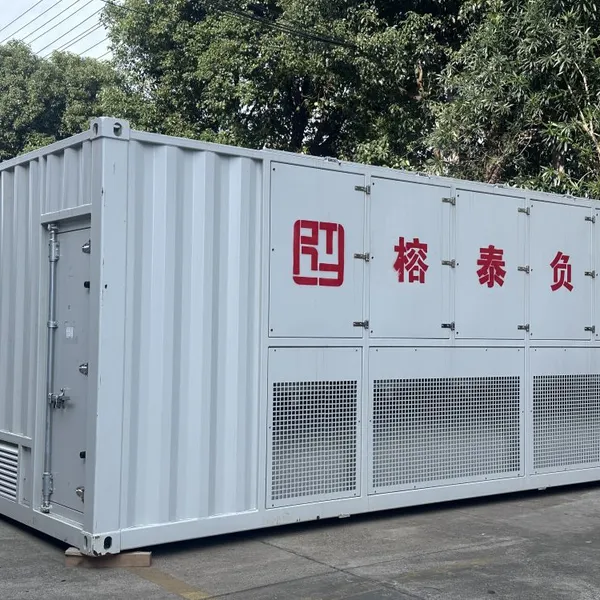 Read More
-
Compact Yet Professional | Clever Uses of Rack-Mounted Loads!
November 6, 2026In recent years, data centers have become the core hubs of the digital economy, making the reliability of power and cooling system Read More

Contact Us
Recommended Products
-
 Latest Design and Upgrade of Liquid Cooling Loadbank Specifically for US‑market CustomersNegotiableMOQ: 1 Unit
-
Liquid Cooled Rack Mounted Load BanksNegotiableMOQ: 1 Unit
-
500kw Liquid-cooled Load BankNegotiableMOQ: 1 Unit
-
AC/DC Watering Cooling Load BankNegotiableMOQ: 1 Unit
-
AC 400V 10-5000 Resistive Load Bank for UPS TestingNegotiableMOQ: 1 Unit
-
MW Container LoadBank for Generator Industrial GradeNegotiableMOQ: 1 Unit
-
6,000 kW Resistive-Inductive Load Bank, 7,500 KVA at 0.8 PF, PLC-ControlledNegotiableMOQ: 1 Combo
-
800 kW Three-Phase AC Load Bank for Generator Acceptance, 400 V, ResistiveNegotiableMOQ: 1 Combo
-
Rack-Mounted Load Bank for Data Hall Testing, 6–8-12 KW, AC/DC UniversalNegotiableMOQ: 50 Units
-
30kW Liquid-cooled Load BoxNegotiableMOQ: 5 Combos
-
Low-Voltage Load Bank for Generator Commissioning, 400 V 3-Phase, Dry-Type ResistiveNegotiableMOQ: 1 Combo
-
Rack-Mounted LoadsNegotiableMOQ: 10 Combos
-
30kW Liquid-cooled Load BoxNegotiableMOQ: 1 Combo
-
30kW Liquid-cooled Load BoxNegotiableMOQ: 5 Units
-
OEM ODM Acceptance Load Bank All Types All Specifications All Dimensions CustomizedNegotiableMOQ: 100 Units
-
Medium Size Power Rate Loadbank Dimension CustomizedNegotiableMOQ: 5 Units
-
Removeable Load Bank With Castors Power Rated Medium Size 500-1000kw UPS Generator TestingNegotiableMOQ: 1 Unit
-
High Voltage Load Bank for Power StationNegotiableMOQ: 1 Unit
-
MW Power Rated Load Bank Industrial GradeNegotiableMOQ: 1 Unit
-
Huge Supply Low Rated Load Bank for Data CenterNegotiableMOQ: 500 Units