
 Business License
Rongtai Load Banks for Data Center Commissioning
Published on 19 November 2026
A load bank is the only piece of test equipment that lets you prove a power system at its rated load before a tenant or a customer does it for you. This article explains how Rongtai load banks — including rack-mounted load bank units, high- and low-voltage load banks, and resistive-inductive load banks — are specified and sequenced for data centre commissioning, generator acceptance, and plant back-feed testing, and what to check before you place an order.
Why Load Testing Slips Down the Schedule — and Why That Is Expensive
The load itself keeps growing. The IEA's Energy and AI special report (April 2025) put data centre consumption at roughly 415 TWh in 2024, about 1.5% of global electricity, with a base-case projection near 945 TWh by 2030. Uptime Institute's 2025 Annual Global Data Center Survey (15th edition) shows the same pressure at rack level: densities are migrating into the 10–30 kW band, few facilities exceed 30 kW, and the mean remains around 7.6 kW per rack.
What that means for a commissioning schedule is straightforward. A hall designed for 12 kW racks cannot be proven with a 5 kW heater bank, and a 2 MVA alternator cannot be signed off on a resistive load that never reaches its kVA rating. Three constraints usually collide:
Standby power compliance is not optional. NFPA 110 requires diesel emergency power supply systems to be exercised monthly for at least 30 minutes at not less than 30% of nameplate kW (or at the manufacturer's minimum exhaust gas temperature). Where that threshold is not met, an annual supplemental load bank test applies — typically 50% for 30 minutes followed by 75% for one hour.
Acceptance testing is specified, not improvised. ANSI/NETA ATS-2025 and ANSI/NETA ECS-2024 define the field tests and commissioning documentation expected before initial energisation of switchgear, transformers, and standby systems.
Site power arrives late. Temporary supply, generator fuel, and cooling are frequently finished after the load test window opens, so the bank has to be sized, delivered, and connected to a schedule that is already moving.
Light-load running is the failure mode behind all three. A diesel set exercised month after month at 10–15% load will wet-stack, glaze its cylinders, and pass a test that proves very little. A UPS that has never seen step load cannot demonstrate its transfer and bypass behaviour. A load bank converts those unknowns into logged numbers.
How Rongtai Load Banks Are Built to Fit the Test Window
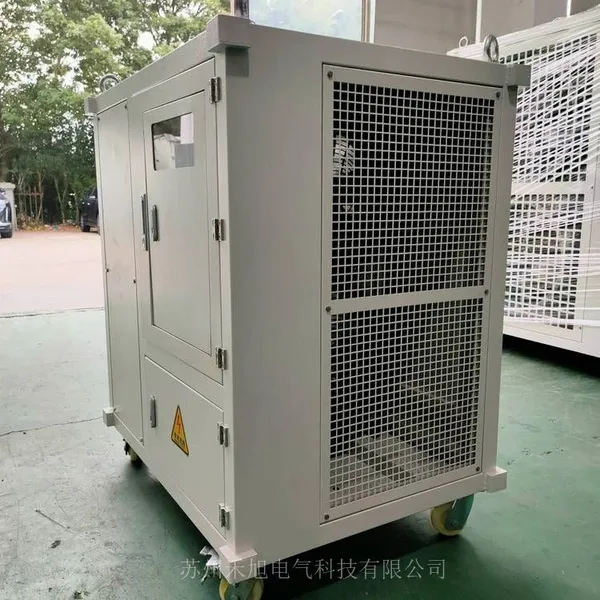
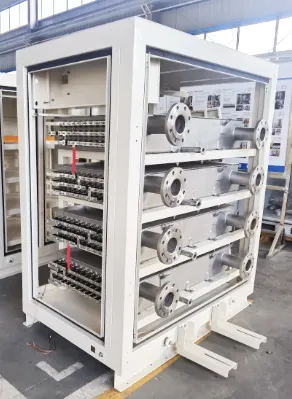
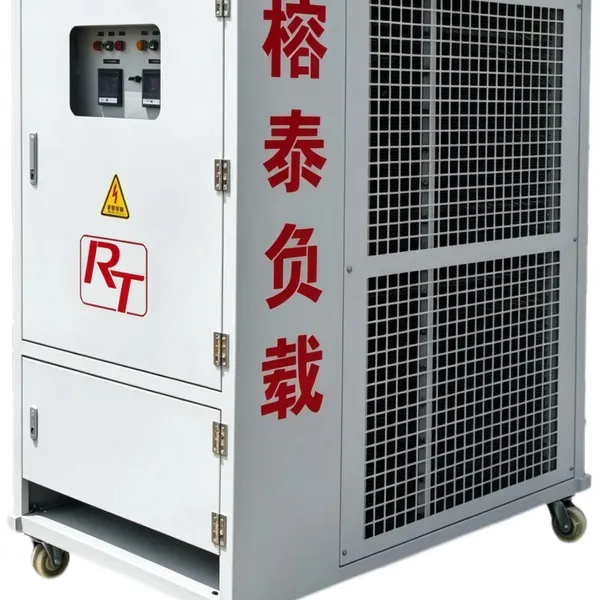
Rongtai builds dry-type load banks across a 1 kW to 50 MW range, with the element stack, switching, and control arranged for the test rather than for a catalogue page:
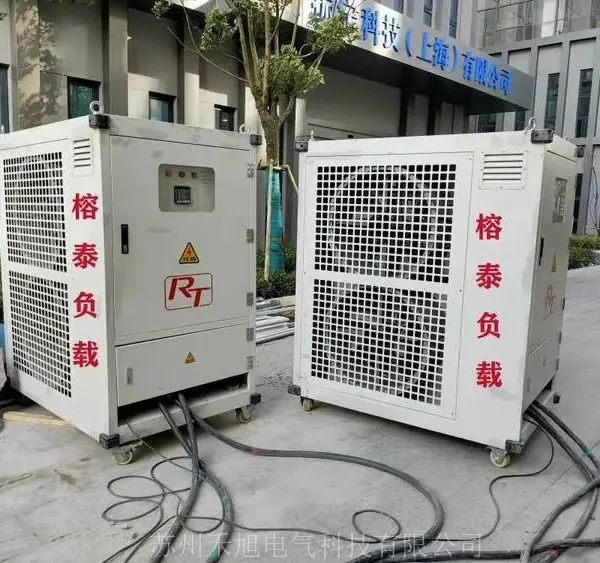
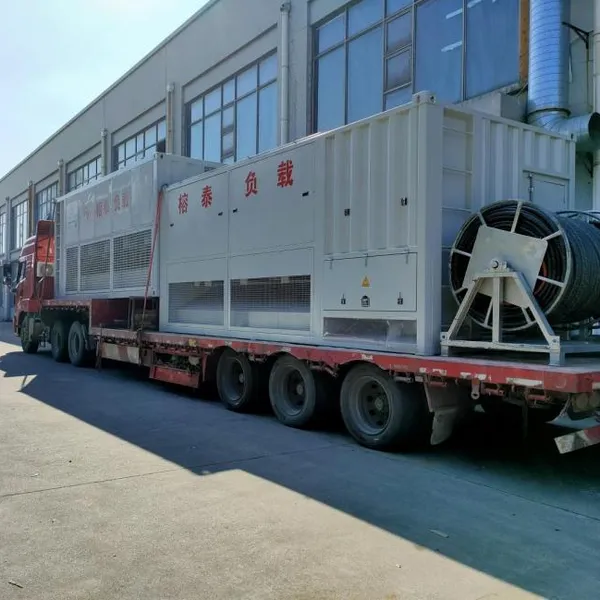
High- and low-voltage load banks. LV chassis cover 380–415 V, 50/60 Hz three-phase four-wire systems at the distribution level; HV units connect at medium voltage for service-entrance, transformer, and generator acceptance, so the test happens at the point the utility sees, not downstream of it.
Resistive-inductive load banks. Resistance alone loads the prime mover but leaves the alternator and voltage regulator short of rated kVA. At a 0.8 power factor, a resistive bank rated in kW reaches only about 80% of the machine's kVA, and the excitation system, AVR response, and winding temperature rise remain untested. Adding inductive steps closes that gap.
Resistive-capacitive banks for leading power factor conditions at UPS output and for the capacitor and filter behaviour that modern double-conversion UPS rectifiers present.
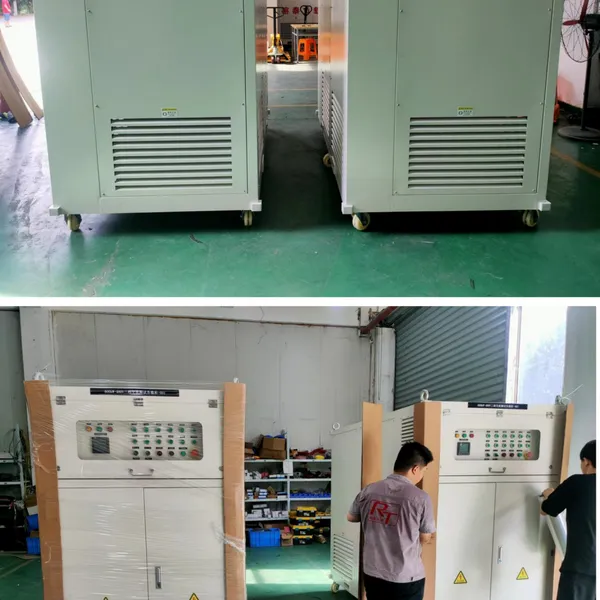
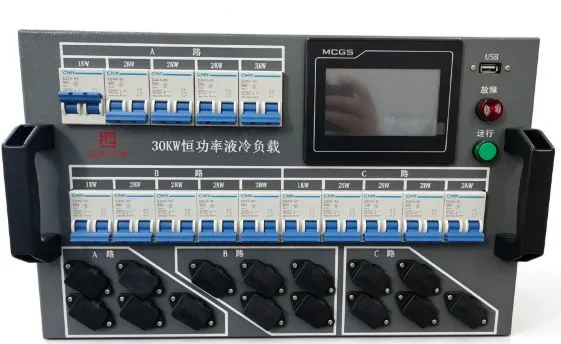
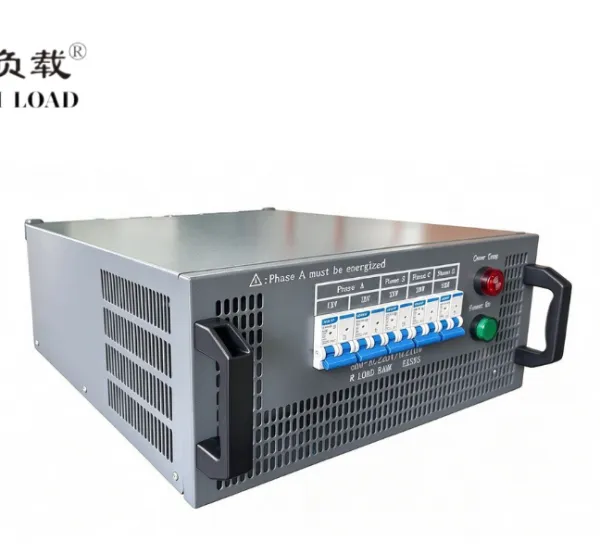
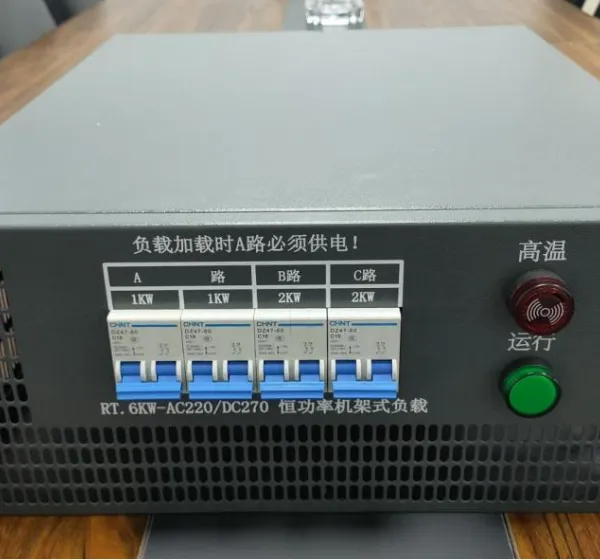
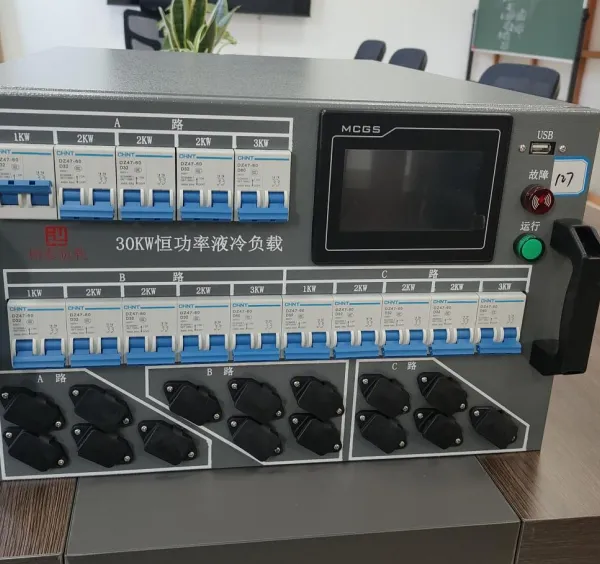
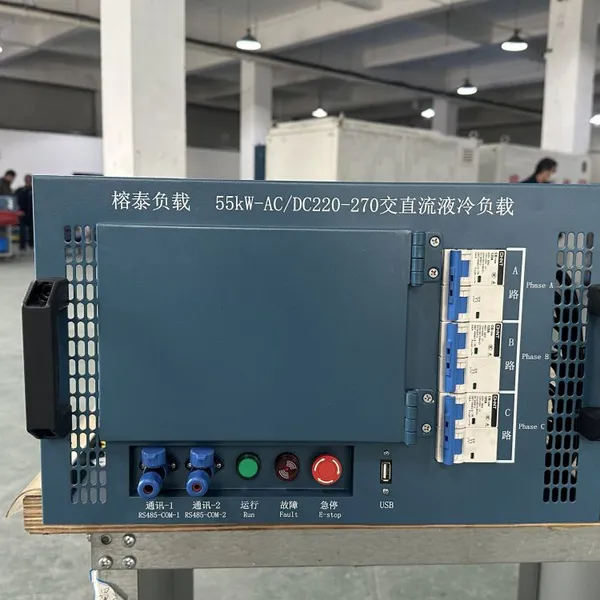
Rack-mounted load banks. A 19-inch, AC/DC universal format that installs in the row it is testing — useful where the load has to sit at the rack or busway rather than at a container parked outside the hall.
DC constant-power and constant-current discharge units for battery string capacity tests, where the discharge curve, not the AC waveform, is the deliverable.
400 Hz ground power units at 115/200 V for aircraft and ground support equipment testing.
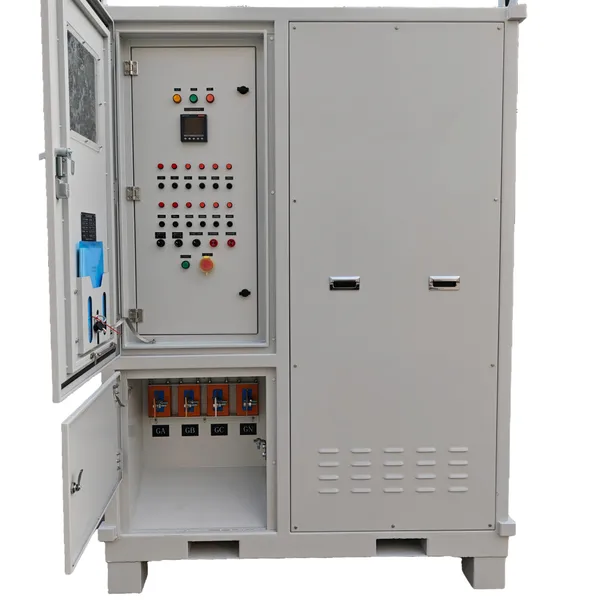
Control is either local panel or remote PC, with stepped application so load can be added in defined increments rather than in one throw. Instrumentation records voltage, current, kW/kVA, power factor, and frequency for the test report.
How to Commission a Data Hall UPS with a Rack-Mounted Load Bank
This is the long-tail question buyers actually search, and it has a fixed logic.
Derive the test load from the rack schedule, not the UPS nameplate. If the hall is specified at 10–30 kW per rack, test at the design block load plus the growth allowance in the electrical basis of design. A nameplate-only test proves the UPS can carry a number nobody will ever ask it to carry.
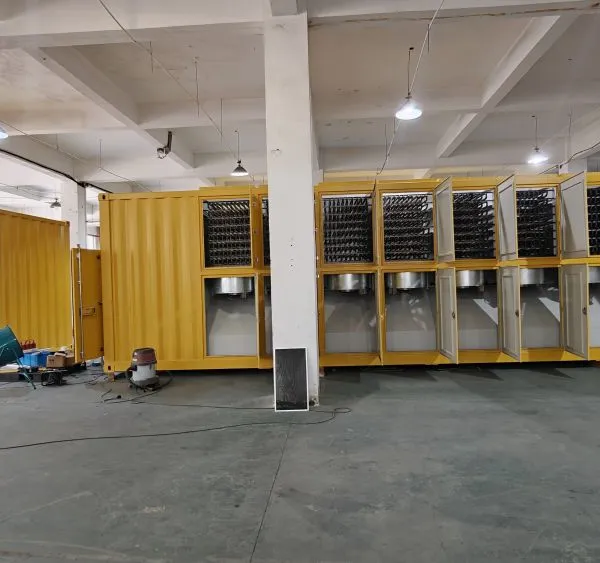
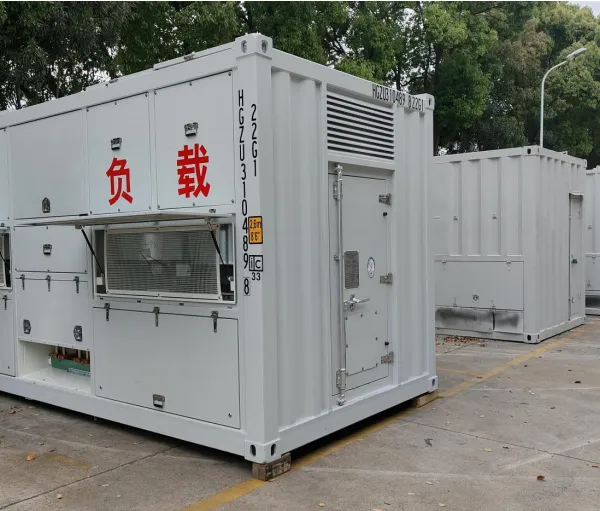
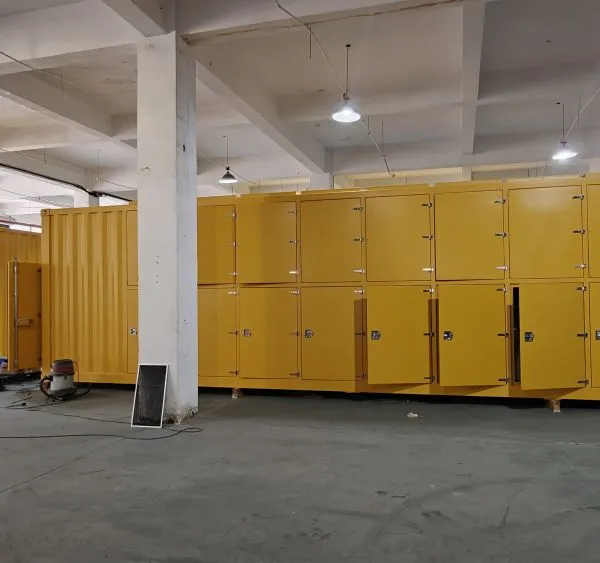
Choose the format by where the load has to sit. Rack-mounted units distribute load across the rows you are commissioning; containerised high-voltage banks serve the service entrance, the paralleled generator bus, and the transformer.
Confirm the electrical interface before the RFQ. Voltage, frequency, phase and wire configuration, step sizes, cable length, and whether power factor control is required. Most schedule slippage at this stage is an interface mismatch, not a manufacturing delay.
Step the load and hold it. A conventional sequence is 25%, 50%, 75%, and 100%, with a minimum 30-minute hold at each step and a full-load soak long enough to see temperature stabilise.
Measure what the acceptance documents require. Output voltage regulation, frequency deviation, transfer and bypass time, THD at the input, battery discharge, and thermal performance of the room under real heat load.
Log and witness. Test sheets signed by the commissioning agent, the owner's representative, and the equipment supplier are what close the item — the bank is only the instrument.
Configurations We Have Delivered
Client names and reported results are not ours to publish, so this section describes configurations and their purpose only.
A 6,000 kW resistive-inductive bank was built for a plant back-feed test, where the station supply is reversed into the system before the grid connection is available — a case that needs both kW and kvar, and a load that can be stepped without stressing the source. Rack-mounted AC/DC units have been supplied for data hall and laboratory commissioning, where the load has to be distributed at the rack rather than concentrated at one point. Smaller 400 Hz units cover ground power testing on aircraft and support equipment.
FAQ
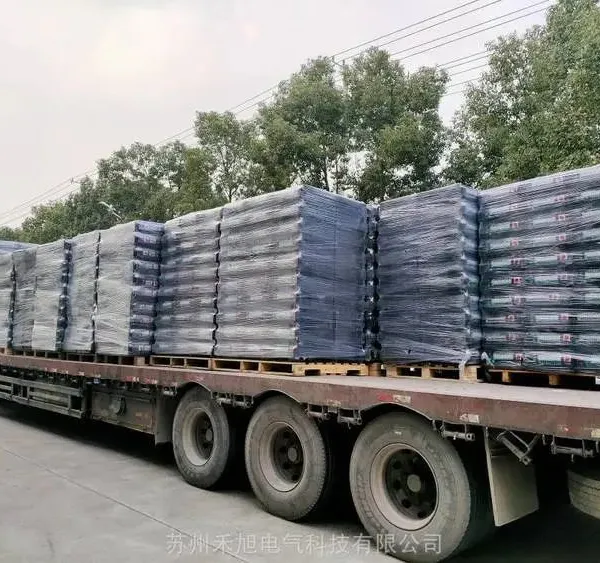
What is the minimum order quantity and typical lead time?Single units are supplied, including rental and short-term project supply. Standard rack-mounted and low-voltage banks ship on a shorter cycle than medium-voltage containers, which are built to the site's voltage, step schedule, and connection arrangement. Give the test date in the enquiry; lead time is quoted against it.
Can voltage, frequency, and step sizes be customised?Yes. Voltage, frequency (50/60 Hz and 400 Hz), step configuration, control method, enclosure, and cable arrangement are all specified per project. Send the electrical basis of design and the test sequence rather than a generic requirement.
Which standards and certifications apply?Units are designed and tested to the standards named in the specification — commonly IEC 60947 for switching and control, IEC 60076-referenced practice for the transformer interface, and local installation codes. CE marking is routine for EU delivery. UL listing depends on the component set and the market; raise it at RFQ rather than assuming it, because a UL requirement changes the contactor, cable, and enclosure selection.
Is resistive load enough for a generator acceptance test?Only if the acceptance criteria are kW-based. If the alternator must be proven at rated kVA and power factor, specify a resistive-inductive bank; a resistive-only unit will leave roughly 20% of the machine's kVA unproven at 0.8 PF.
Next Step
Bring the test schedule, the electrical basis of design, and the standards the commissioning agent will hold you to. A specification review against those three documents will tell you whether a rack-mounted bank, a high-voltage container, or a resistive-inductive combination is the right instrument — and whether the lead time still fits the date on the programme.


Contact Us
Recommended Products
-
 Latest Design and Upgrade of Liquid Cooling Loadbank Specifically for US‑market CustomersNegotiableMOQ: 1 Unit
-
Liquid Cooled Rack Mounted Load BanksNegotiableMOQ: 1 Unit
-
500kw Liquid-cooled Load BankNegotiableMOQ: 1 Unit
-
AC/DC Watering Cooling Load BankNegotiableMOQ: 1 Unit
-
AC 400V 10-5000 Resistive Load Bank for UPS TestingNegotiableMOQ: 1 Unit
-
MW Container LoadBank for Generator Industrial GradeNegotiableMOQ: 1 Unit
-
30kW Liquid-cooled Load BoxNegotiableMOQ: 5 Combos
-
Low-Voltage Load Bank for Generator Commissioning, 400 V 3-Phase, Dry-Type ResistiveNegotiableMOQ: 1 Combo
-
Rack-mounted LoadNegotiableMOQ: 50 Units
-
Rack-Mounted LoadsNegotiableMOQ: 10 Combos
-
30kW Liquid-cooled Load BoxNegotiableMOQ: 1 Combo
-
7500kVA-6000kW Intelligent Resistive-Inductive Integrated Load BoxNegotiableMOQ: 1 Combo
-
800kW Three-phase AC Load BoxNegotiableMOQ: 1 Combo
-
30kW Liquid-cooled Load BoxNegotiableMOQ: 5 Units
-
OEM ODM Acceptance Load Bank All Types All Specifications All Dimensions CustomizedNegotiableMOQ: 100 Units
-
Medium Size Power Rate Loadbank Dimension CustomizedNegotiableMOQ: 5 Units
-
Removeable Load Bank With Castors Power Rated Medium Size 500-1000kw UPS Generator TestingNegotiableMOQ: 1 Unit
-
High Voltage Load Bank for Power StationNegotiableMOQ: 1 Unit
-
MW Power Rated Load Bank Industrial GradeNegotiableMOQ: 1 Unit
-
Huge Supply Low Rated Load Bank for Data CenterNegotiableMOQ: 500 Units